
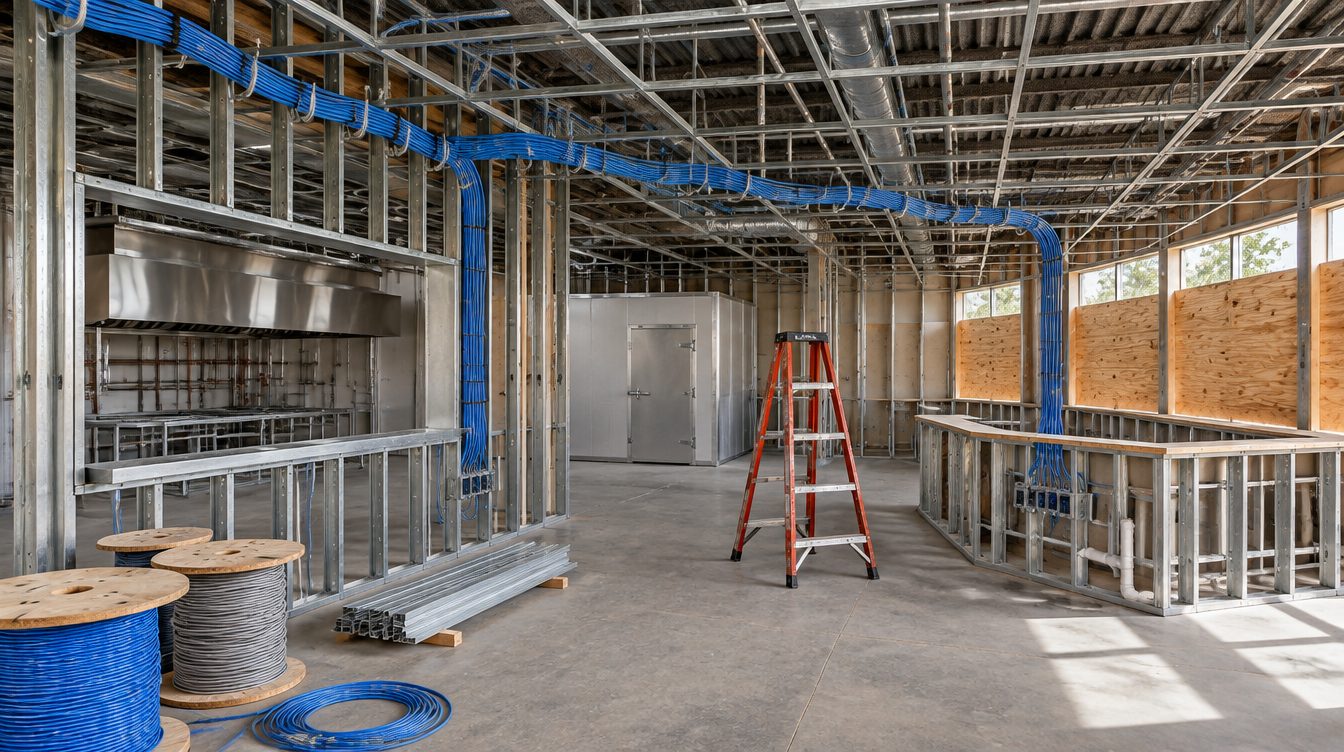
A security camera system for a Dallas restaurant covers the front door, the cash drawers, the bar, the stock room and the delivery door, records to a box in the restaurant's own network closet, and runs with the microphones switched off. ClearMax technicians wire each camera on its own cable during the buildout and hand over the logins in the restaurant's name.
Last updated: November 2026
Placing cameras around the cash and the doors
Most of what an owner needs from footage happens in a few places, so the plan starts there and adds cameras only where they answer a real question.
- The entrance: a face-height view of everyone who comes in, useful when a dispute or a slip-and-fall claim arrives weeks later.
- The cash drawers: a view of the drawer and the counter that shows hands and money, set so it does not read the keypad where guests enter a PIN.
- The bar: the well, the register and the back bar, where pours and voids add up.
- The stock and liquor rooms: the door and the shelves, not the whole ceiling.
- The delivery door and the alley: who comes and goes at the back, and when.
- The parking lot: where the lease allows a camera on the building, for cars and late closing shifts.
Each camera gets its own powered cable run back to the closet. Wired cameras keep recording when the WiFi is busy, and one run carries both power and video.
Light decides more than resolution does. A dining room dimmed for dinner, a bar lit from below and an alley with one bulb each need a camera chosen for low light, and the entrance camera has to cope with a bright doorway behind a guest. Each view is checked at night service before the job is signed off, not only in daylight.
Why the audio stays switched off
Many cameras ship with a microphone turned on. In a dining room that means recording guests at their tables and staff on their breaks, and Texas law speaks directly to intercepting conversations. Texas Penal Code Section 16.02(b)(1) makes it an offense when a person intentionally intercepts, endeavors to intercept, or procures another person to intercept a wire, oral, or electronic communication. Section 16.02(c)(4) gives a defense where the person is a party to the communication, or one of the parties has given prior consent, unless the communication is intercepted for the purpose of committing an unlawful act.
A recorder in the closet is not a party to the conversation at table twelve. So every microphone is switched off at setup, and the setting is written into the handover file. Any owner who wants audio somewhere specific raises it with counsel first. This site gives no legal advice.
Places that never get a camera
- Restrooms and anywhere people change clothes, staff lockers included.
- The keypad of any card reader where guests or staff enter a PIN.
- Any view into a neighboring tenant's space or a private home.
Posted signs at the entrance tell guests the space is recorded. The camera list in the handover file shows each camera's view, so anyone checking later can see what it covers and what it leaves out.
The recorder and how long footage is kept
The recorder sits in the network closet on the camera side of the firewall, with its own storage sized from the camera count and the number of days the owner wants kept. Thirty days is a common starting point; some owners keep longer for the cash and the bar. Motion recording stretches the storage without losing the moments that matter.
The recorder rides on the closet battery through short power flickers, so a storm blink in July does not cost an evening's footage. Its clock is set to the internet time so a clip lines up with a POS receipt to the minute.
Logins and who holds them
The recorder, the camera app and every administrator account are opened in the restaurant's name. The owner chooses who gets a viewing login, such as a general manager or a bar lead, and can take any of them back. Passwords are handed to the owner at handover. Firmware is brought up to date before the system goes live, and default passwords are changed on every camera.
What owners check before the cameras go up
Can the old cameras be reused?
Sometimes. Each one is tested, and the ones that still record cleanly and work with the new recorder can stay. Older analog cameras usually come out with their coax.
Can managers view footage from a phone?
Yes, through the recorder's app, signed in with a login the owner issues. The connection goes through the firewall rather than an open port.
Does the camera work need its own visit?
No. Camera runs are pulled with the rest of the cable at rough-in, and the cameras are mounted and aimed once the walls are painted.