
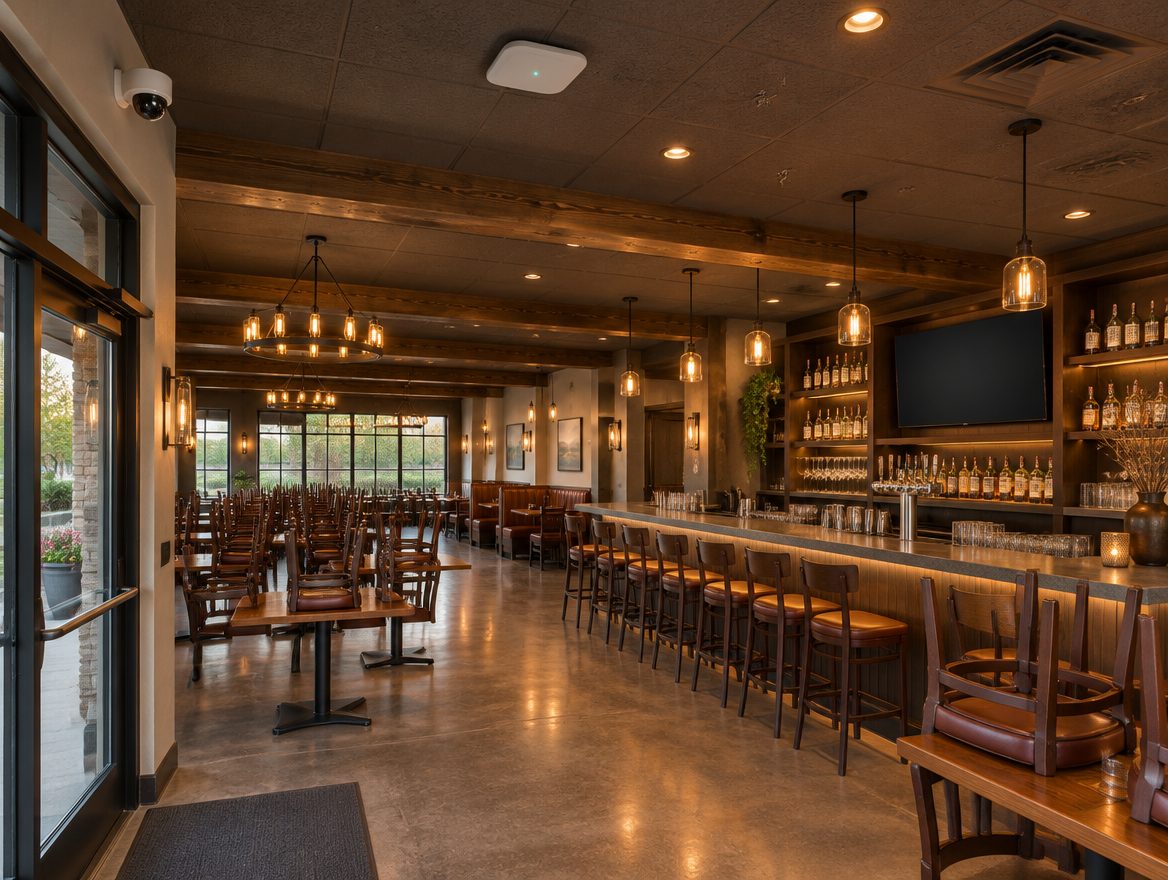
Network cabling for a Dallas restaurant means one tested, tagged run from the closet to every device that takes an order or a payment: registers, card readers, receipt and kitchen printers, kitchen display screens, menu boards and the ceiling access points that carry guest and staff WiFi. ClearMax technicians pull it at rough-in and hand over the results before the POS vendor's install date.
Last updated: November 2026
A drop for each device on the floor plan
The count starts at the host stand and walks the room the way a server does. Each register gets a drop, and so does each card reader with a cord, each receipt printer, each kitchen printer and each screen at the pass. The back office takes a run for the computer and one for the printer, and every access point in the ceiling takes one more.
Then a spare goes beside every busy cluster. A second bar terminal or a new fry-station screen is far easier to add on a spare jack than by fishing cable through a finished ceiling.
- Front of house: host stand, registers, card readers, the bar, menu boards and patio access points.
- Back of house: kitchen printers, display screens, the expo line, the office and the stock room.
- Back of the building: the delivery door reader, the camera over the alley and the closet itself.
The cable standard the POS expects
A payment system will run on a poor cable for a while and then fail at the worst hour. Vendors publish the floor they will accept. Toast's site readiness guide says Toast will not complete the install if the Ethernet cables are less than 100MB (Cat5e). Its network requirements add that all cabling should be Cat5e or higher and properly terminated in the EIA/TIA 568B wiring standard.
So every run is Cat6 or better, terminated to one standard at both ends and run through a cable tester, not just checked for a link light. Runs stay clear of the walk-in compressor, the hood motors and fluorescent ballasts, which put noise on a cable laid against them. Near the dish pit and the prep sinks, jacks go high on the wall in boxes that stand up to a hose-down.
Card traffic on a lane of its own
A restaurant network carries very different traffic at once: card payments, kitchen tickets, a manager checking email, a guest streaming video on the patio. They should not share one flat network. Toast's network requirements say a VLAN should be set up for the Toast POS network, separate from all other traffic. The switch and firewall are set up that way from day one, as part of the full restaurant buildout, with the POS ports tagged so a busy night shift never plugs a laptop into one.
WiFi for the dining room, the patio and the staff
Dining rooms are hard on WiFi. Bodies, glass, metal shelving and a full patio all soak up signal, and a single router behind the bar rarely reaches the far booths. Access points go in the ceiling on their own cable runs, placed from the floor plan and then checked on site with a signal survey once the room is closed in.
Three networks usually come out of that hardware:
- Staff: handhelds, tablets and the kitchen display controller, on the POS side of the firewall where the vendor calls for it.
- Office: the back-office computer, the printer and the manager's laptop.
- Guests: an open or password network that reaches the internet and nothing else in the building.
Patio coverage gets its own attention, because Dallas summers push equipment hard. Outdoor access points are rated for heat and mounted out of the afternoon sun where the building allows it.
The internet line and the firewall
The fastest cable in the building cannot fix a thin internet connection. Toast's network requirements give a minimum speed of 15 Mbps down and 5 Mbps up, which should be dedicated strictly to Toast. The firewall is set so guest streaming cannot crowd out a payment in the middle of a rush, and the internet order is placed early, since a new line can take weeks to arrive.
Tags, test results and the port map
Every jack carries a tag that matches a port on the patch panel, and the panel matches a drawing. The handover file holds the tester results for each run, the floor plan with every drop marked, and a port map that says which switch port feeds which device. When a printer stops at nine on a Saturday, a manager can find its cable in a minute instead of tracing wires behind the line.
Pulling cable around a working kitchen
Can cable go in while the restaurant is open?
Yes, on a refit. Work is booked before opening, between lunch and dinner, or on the day the dining room is closed, and the old network carries service until the new runs are tested and switched over.
Who handles the drop ceiling and the walls?
The general contractor owns walls and ceilings. The cable plan is shared with them early so boxes, sleeves and pathways are in place before they close up.
Is the old cable worth keeping?
Sometimes. Each existing run is tested, and the ones that pass and sit where devices will go are kept and tagged.